Dogs over 50 lbs have fundamentally different metabolic, skeletal, and digestive needs than small breeds. Their joints bear more load, their hearts work harder, their stomachs are anatomically more vulnerable to bloat, and they age differently. A "large breed formula" label isn't enough — you need to understand what's actually inside and why it matters.
The 5 Nutrients Large Breed Dogs Need Most
1. Controlled Calcium-to-Phosphorus Ratio
For large breed puppies especially, calcium excess is one of the leading causes of developmental orthopedic disease (DOD), including hip dysplasia and osteochondrosis. The ideal Ca:P ratio for large breeds is between 1:1 and 1.3:1. Many generic puppy foods exceed this and shouldn't be fed to breeds like Labs, German Shepherds, or Mastiffs.
2. Glucosamine & Chondroitin
Joint health is a lifelong concern for large breeds. Formulas with glucosamine (minimum 400mg/kg) and chondroitin sulfate help maintain cartilage integrity, especially in breeds with known hip issues. These nutrients are particularly critical from age 5 onward.
3. Appropriate Protein Levels
Large breeds thrive on 22–26% protein content (dry matter basis) from high-quality animal sources. Look for named meats (chicken, salmon, beef) as the first ingredient — not generic "meat meal."
4. Omega-3 Fatty Acids (EPA + DHA)
Anti-inflammatory omega-3s from fish oil or flaxseed support joint health, coat quality, and cognitive function. Look for at least 0.5% omega-3 on the guaranteed analysis.
5. Moderate Fat, Controlled Calories
Large breeds are prone to obesity, which dramatically accelerates joint degeneration. Fat content should be in the range of 10–14% (dry matter basis). Avoid formulas marketed as "high energy" for less active large breeds.
🚫 Ingredients to Avoid in Large Breed Food
- Corn syrup or added sugars — promote obesity and inflammation
- Generic "animal by-product meal" — low-quality, inconsistent protein source
- Excessive calcium — especially dangerous for large breed puppies
- Artificial preservatives (BHA, BHT, ethoxyquin)
- Soy as primary protein — lower digestibility, high phytoestrogen content
Large Breed Puppy vs. Adult: A Critical Distinction
Large breed puppies should never eat regular puppy food. Standard puppy formulas are too calorie-dense and calcium-rich, promoting growth rates that outpace skeletal development. Always choose food labeled for "large breed puppies" until your dog reaches 80% of their estimated adult weight — typically 12–18 months for large breeds, up to 24 months for giants like Great Danes.
| Life Stage | Key Priority | Protein (DM) | Fat (DM) | Calories (kcal/kg) |
|---|---|---|---|---|
| Large Breed Puppy | Controlled Ca:P, moderate calories | 22–28% | 10–15% | 3,200–3,600 |
| Large Breed Adult | Joint support, weight management | 22–26% | 10–14% | 3,200–3,800 |
| Large Breed Senior (7+) | Reduced phosphorus, joint support | 20–24% | 8–13% | 2,800–3,400 |
| Giant Breed (90+ lbs) | Extra joint support, bloat awareness | 22–25% | 10–13% | 3,000–3,500 |
Feeding Frequency and Bloat Risk
How you feed matters as much as what you feed. Large, deep-chested breeds are anatomically predisposed to GDV. Research consistently shows dogs fed once daily have significantly higher GDV risk than those fed twice or more per day. Split your large breed dog's daily ration into at least two meals.
✅ Feeding Schedule for Large Breeds: Best Practice
- Feed 2–3 times daily — never just once
- Avoid exercise 1 hour before and after meals
- Use a slow feeder bowl to prevent gulping and air ingestion
- Measure portions — don't free-feed large breeds
- Always provide fresh water after meals, not during
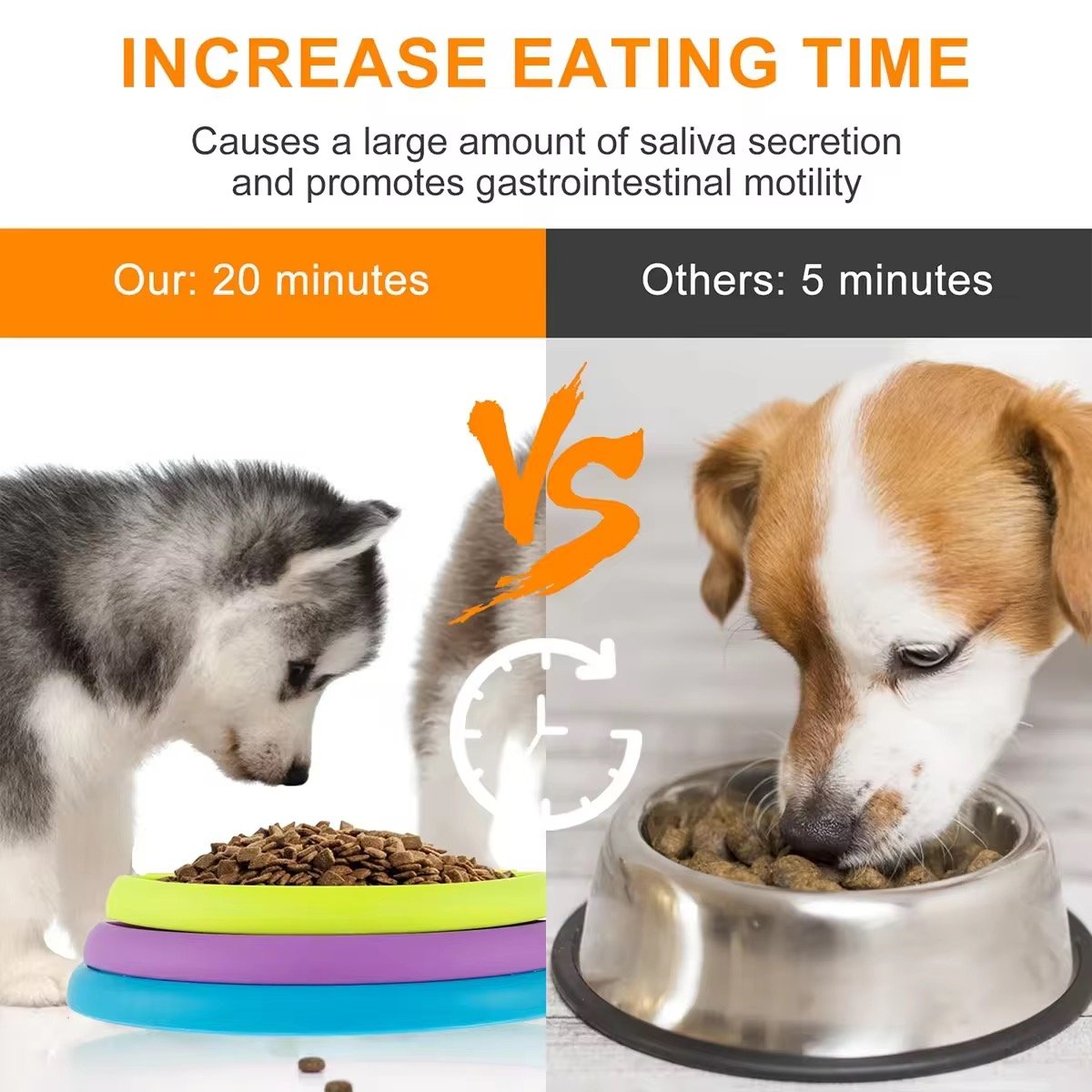
Designed for Large Breeds
The Vozonix 3-Level Slow Feeder is vet-recommended for large, deep-chested breeds. Reduces eating speed by 70% — a proven GDV risk reduction strategy at every meal.
Shop the Vozonix Slow Feeder — $24.99 →