Your Great Dane finishes dinner. Thirty minutes later he's pacing, unable to settle, his left side visibly swollen. He tries to vomit — nothing comes out. You're not sure if it's serious.
It is. What you're watching is GDV in progress — and every minute you wait reduces his chance of survival.
GDV is the condition every large breed owner has probably heard of but most don't truly understand until it's too late. This guide covers the anatomy, the statistics, the warning signs, the surgery, and the six daily habits that give your dog the best possible odds.
If your dog shows any combination of these symptoms, drive to an emergency vet immediately. Do not search online. Do not call and wait. Go:
- Unproductive retching — trying to vomit but nothing comes out
- Visibly swollen or hard abdomen, especially on the left side
- Extreme restlessness, pacing, unable to lie down comfortably
- Excessive drooling or salivating
- Pale, white, or grey gums
- Rapid, shallow breathing
- Sudden collapse or inability to stand
What GDV Actually Is — The Anatomy
The term "bloat" is commonly used for two distinct conditions that are often conflated. Understanding the difference matters because they have very different implications:
Simple Gastric Dilatation is stomach expansion from gas, food, or fluid. Uncomfortable and potentially dangerous, but manageable — the stomach hasn't moved.
Gastric Dilatation-Volvulus (GDV) is what makes bloat a killer. Here the gas-filled stomach rotates — sometimes a full 180 to 360 degrees — on the axis connecting the oesophagus and duodenum. This rotation traps everything inside, kinks off blood supply to the stomach wall, and often twists the spleen with it. Stomach tissue begins dying within minutes. Toxins flood the bloodstream. The cardiovascular system collapses.
The Three Stages of GDV Progression
Stomach fills with gas. Distension begins. Dog is uncomfortable but stable. Window for non-surgical intervention.
Stomach rotates. Blood supply cut off. Pain intensifies. Cardiovascular compromise begins. Requires immediate surgery.
Tissue necrosis, toxaemia, cardiovascular collapse. Survival rate drops sharply. Every hour matters.
Which Breeds Are Most at Risk — and Why
GDV is primarily an anatomical disease. The stomach of a deep-chested dog has significantly more room to rotate than that of a shallow-chested dog. Think of it like a hammock — the wider and deeper the chest cavity, the more freely the stomach can swing and twist.
This is why breed matters so profoundly. A Dachshund's stomach is physically constrained by a shallow chest. A Great Dane's stomach sits in an enormous cavity with room to rotate freely. Same biological mechanism — completely different risk profile.
| Breed | Chest Profile | Estimated Lifetime Risk | Risk Level |
|---|---|---|---|
| Great Dane | Very deep, narrow | ~42% | Critical ████████ |
| Irish Setter | Deep, long | ~14% | Very High █████ |
| Weimaraner | Deep, tucked | ~12% | Very High ████ |
| Standard Poodle | Deep, lean | ~11% | High ████ |
| Gordon Setter | Deep | ~9% | High ███ |
| German Shepherd | Moderate–deep | ~5–8% | Moderate–High ███ |
| Doberman Pinscher | Deep, long | ~5–7% | Moderate–High ██ |
| Labrador Retriever | Moderate | ~3–5% | Moderate ██ |
| Golden Retriever | Moderate | ~3–5% | Moderate ██ |
| Boxer | Moderate–deep | ~3–4% | Moderate ██ |
| Small/shallow-chested breeds | Shallow | <0.5% | Low ▪ |
Other Risk Factors Beyond Breed
Breed is the largest single predictor, but it's not the only one. Research has consistently identified several additional risk factors:
- Age: Risk increases with age. Dogs over 7 years old have significantly higher GDV rates than younger dogs of the same breed.
- Sex: Male dogs have a slightly higher risk than females — studies estimate approximately 1.5x higher incidence.
- Body weight: Heavier dogs within a breed have higher risk, likely because greater abdominal mass creates more rotational momentum.
- Eating speed: Fast eaters swallow dramatically more air. This aerophagia (air swallowing) is one of the most consistently identified GDV triggers.
- Meal frequency: Dogs fed once daily have significantly higher GDV risk than those fed twice or more per day. The one large meal creates extreme gastric distension.
- Exercise timing: Vigorous exercise within 1–2 hours of eating is a well-documented risk factor.
- Stress: Dogs in stressful environments — kennels, loud households, recent rehoming — have measurably higher GDV rates.
- Family history: Dogs with first-degree relatives that have had GDV are at significantly elevated risk, suggesting a genetic component to stomach ligament laxity.
"No single factor causes GDV. It's a perfect storm of anatomy, environment, and behaviour — which is why prevention requires addressing several things at once, not just one."
Recognising GDV — A Timeline of Symptoms
The window between early GDV and life-threatening emergency can be as short as 60–90 minutes in large breeds. Knowing what to look for at each stage is the difference between a dog that survives and one that doesn't.
Early
First Warning Signs — Act Now
- Unproductive retching (the most telling sign — nothing comes out)
- Dog appears restless, uncomfortable, won't settle after eating
- Abdomen looks slightly larger than usual, especially on left side
- Excessive licking of lips or drooling
- Dog frequently changes position, can't get comfortable
Progressing
Escalating — Emergency Vet Immediately
- Abdomen clearly distended and hard — sounds hollow when tapped
- Retching continues, increasingly distressed
- Rapid, laboured breathing
- Dog visibly in pain, hunched posture or "prayer position"
- Reluctance to move, guarding abdomen
Critical
Cardiovascular Collapse — Every Minute Is Critical
- Pale, white, grey, or bluish gums (sign of shock)
- Rapid, weak pulse
- Severe weakness — dog cannot stand or collapses
- Cold extremities
- Unconsciousness
Unproductive retching in a large breed dog is a GDV emergency until proven otherwise. A dog that repeatedly tries to vomit but produces nothing — especially after a meal — should be at an emergency vet within minutes, not hours. Do not wait to see if it passes. It won't.
The Surgery — Survival Rates and What to Expect
GDV requires emergency surgery. There is no home treatment, no wait-and-see, no alternative. The goals of surgery are: decompress the stomach, return it to its correct position, assess tissue viability, remove any necrotic tissue, and perform a gastropexy to prevent recurrence.
Survival Rate vs. Time to Treatment
Complications that increase mortality risk include: spleen involvement requiring splenectomy, cardiac arrhythmias (which can develop up to 72 hours post-surgery), and stomach wall necrosis requiring partial gastrectomy. Dogs that survive the surgery and the critical 72-hour post-operative window generally make full recoveries.
The financial reality: GDV surgery costs between $3,000 and $8,000 depending on location, severity, and complications. This is a strong practical argument for pet insurance in large breed owners — specifically policies that cover gastric emergencies.
6 Daily Habits That Dramatically Reduce GDV Risk
You cannot eliminate GDV risk entirely. But the gap between a well-managed large breed dog and an unmanaged one is enormous. These six habits, consistently applied, represent the current best evidence for risk reduction.
Use a Slow Feeder Bowl at Every Meal ⭐ Highest Impact
Fast eating is the single most modifiable GDV risk factor. Every mouthful gulped at speed swallows air into the stomach. A multi-level puzzle slow feeder reduces eating speed by up to 70%, dramatically cutting air ingestion. For a Great Dane or German Shepherd, this is non-negotiable — not optional. Use it for every meal, every day.
Feed 2–3 Smaller Meals Daily — Never Just One
A single large daily meal is one of the most consistently identified GDV risk factors across multiple large-scale studies. Split the same daily food volume into two or three meals. Smaller volumes per meal means less acute gastric distension, lower internal pressure, and less opportunity for gas accumulation. This one change alone meaningfully reduces lifetime risk.
Enforce a 1–2 Hour Rest After Every Meal
Exercise immediately after eating is a well-established GDV trigger. The physical motion of running, jumping, or even rough play creates conditions for a gas-filled stomach to swing and rotate. For high-risk breeds, enforce 60–120 minutes of complete rest after every meal. No walks, no play, no stairs if avoidable. Consistency matters — this rule should apply every day, not just sometimes.
Feed in a Calm, Low-Stress Environment
Stress is a documented GDV risk factor. Dogs that eat in anxious states — due to other dogs nearby, loud noise, or uncertain feeding routines — eat faster, swallow more air, and show higher GDV rates in kennel studies. Create a consistent, quiet feeding ritual. Same location, same time, same calm energy. Separate dogs if there's any mealtime competition. The fifteen seconds you save by rushing feeding is not worth the risk.
Avoid Feeding Immediately Before or After Drinking Large Volumes
Large water intake immediately before or after a meal increases gastric volume significantly, adding to the distension risk. Provide normal access to water at all times, but avoid situations where your dog drinks very large amounts immediately around mealtimes — for example, after vigorous exercise followed directly by eating.
Discuss Prophylactic Gastropexy with Your Vet
For breeds with lifetime GDV risk above 10% — Great Danes, Irish Setters, Weimaraners, Standard Poodles — preventive gastropexy is increasingly recommended by veterinary internists. The procedure surgically tacks the stomach to the abdominal wall, preventing rotation. It can be performed at the same time as spaying or neutering, adding minimal extra recovery. It does not prevent gastric dilatation, but eliminates the volvulus — the life-threatening component.
A 2003 study in JAVMA (Journal of the American Veterinary Medical Association) found that prophylactic gastropexy reduced lifetime GDV mortality risk in Great Danes from 37% to less than 2%. That is not a small effect — it is transformative. For breeds with the highest lifetime risk, this is one of the most impactful decisions an owner can make.
The procedure is laparoscopic when performed prophylactically and typically adds $200–500 to a spay or neuter procedure. Compare that to $3,000–8,000 for emergency GDV surgery with no guaranteed outcome.
Be Prepared Before It Happens
The single most important thing you can do right now — before any symptoms appear — is identify your nearest 24-hour emergency veterinary clinic and save the number in your phone. In a GDV emergency, you will not have time to search. You need to be driving within minutes of recognising symptoms.
- Find your nearest 24/7 emergency vet today. Don't wait. Save the address and phone number.
- Know the drive time. If it's more than 30 minutes, know the route cold and identify any alternatives.
- Consider pet insurance that specifically covers gastric emergencies. Check the policy exclusions carefully.
- Tell everyone in your household what GDV looks like and what to do. In an emergency, the person home may not be you.
- Never delay to "see if it gets better." GDV does not get better on its own. Every minute of delay costs survival probability.
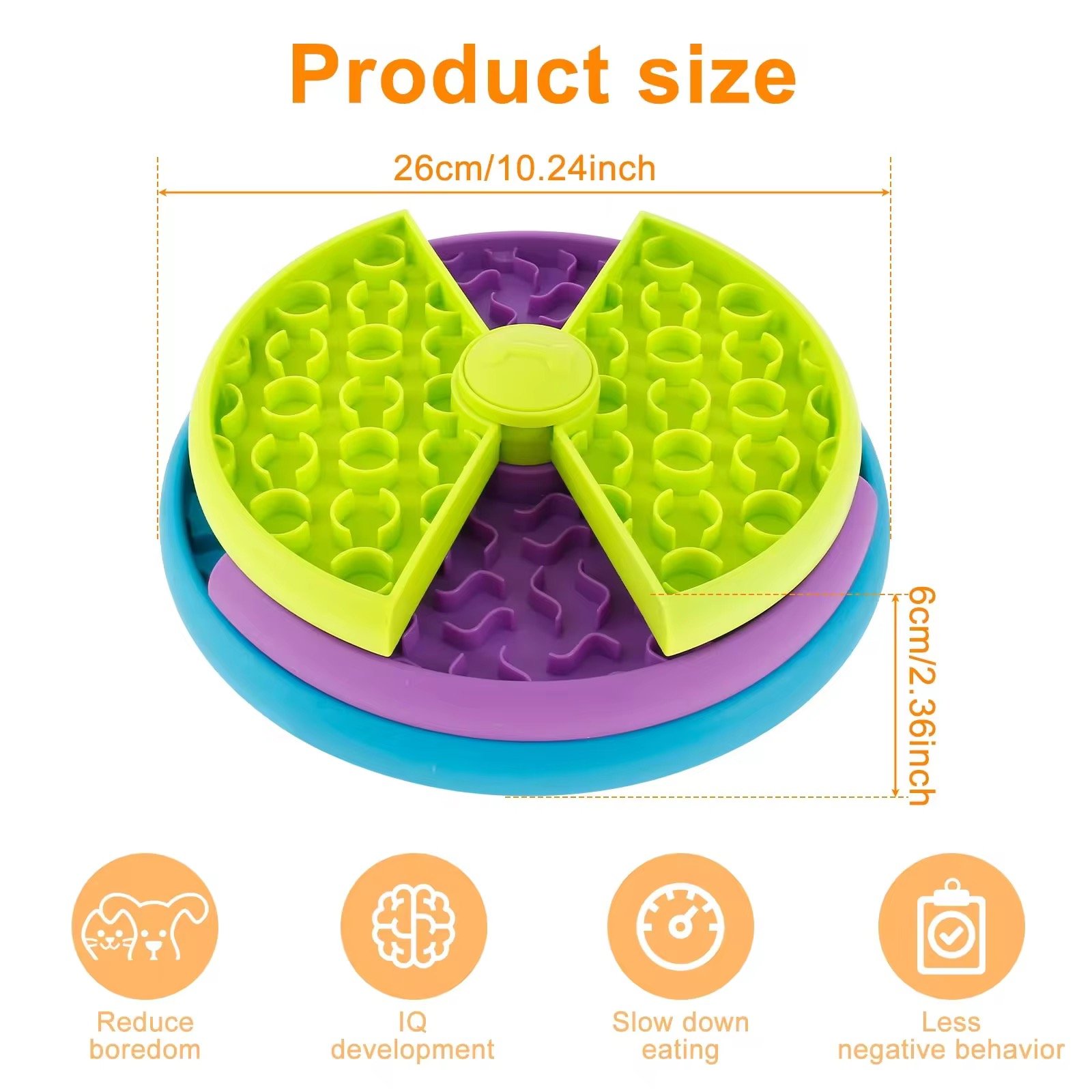
The Most Impactful Daily Change You Can Make
For large breed owners, a slow feeder bowl is one of the highest-value preventive investments available. Reduce air swallowing by up to 70% — starting at the very next meal.
Shop the Vozonix Slow Feeder — $24.99 →