The canine digestive system is a remarkable piece of biological engineering — significantly different from humans in ways that matter for how you feed, what you feed, and how you interpret symptoms. Understanding these differences directly informs better feeding decisions that affect your dog's energy, coat, immunity, and lifespan.
How the Canine Digestive System Works
From Mouth to Stomach
Unlike humans, dogs don't begin digestion in the mouth. Their saliva lacks amylase — the starch-digesting enzyme in human saliva — meaning they get virtually no carbohydrate breakdown while chewing. Food moves quickly to the stomach, where the real work begins.
The Stomach: A Highly Acidic Environment
The canine stomach has a pH of 1–2 (compared to 1.5–3.5 in humans at maximum acidity). This extreme acidity allows dogs to digest bone, break down raw meat efficiently, and kill most bacterial pathogens. However, it also means the stomach is highly sensitive to rapid food volume changes and — critically — large amounts of swallowed air.
The Microbiome
The colon is home to billions of bacteria — the gut microbiome. In dogs, a balanced microbiome is dominated by Firmicutes and Bacteroidetes. Diet, antibiotics, stress, and illness can disrupt this balance (dysbiosis), leading to chronic diarrhea, poor nutrient absorption, and immune dysfunction.
The Most Common Dog Digestive Problems
| Condition | Key Symptoms | Common Cause | First Response |
|---|---|---|---|
| Acute gastroenteritis | Vomiting, diarrhea, lethargy | Dietary indiscretion, infection | Bland diet 24–48hrs, vet if severe |
| IBD | Chronic vomiting/diarrhea, weight loss | Immune dysfunction, diet | Veterinary diagnosis required |
| EPI | Loose stools, rapid weight loss, ravenous appetite | Pancreas fails to produce enzymes | Enzyme supplementation (vet) |
| GDV (Bloat) | Unproductive retching, distended belly | Fast eating, large meals, exercise | EMERGENCY — vet immediately |
| Constipation | Straining, no stool for 2+ days | Low fiber, dehydration, obstruction | Hydration, fiber; vet if prolonged |
Diet Strategies That Support Digestive Health
1. Prioritize Highly Digestible Protein
Protein digestibility in dogs varies significantly by source. Egg protein is 95%+ digestible; chicken and fish 85–90%; plant proteins like soy and corn gluten 70–75%. Higher digestibility means less fermentation in the large intestine and less gas and loose stools.
2. Manage Feeding Speed
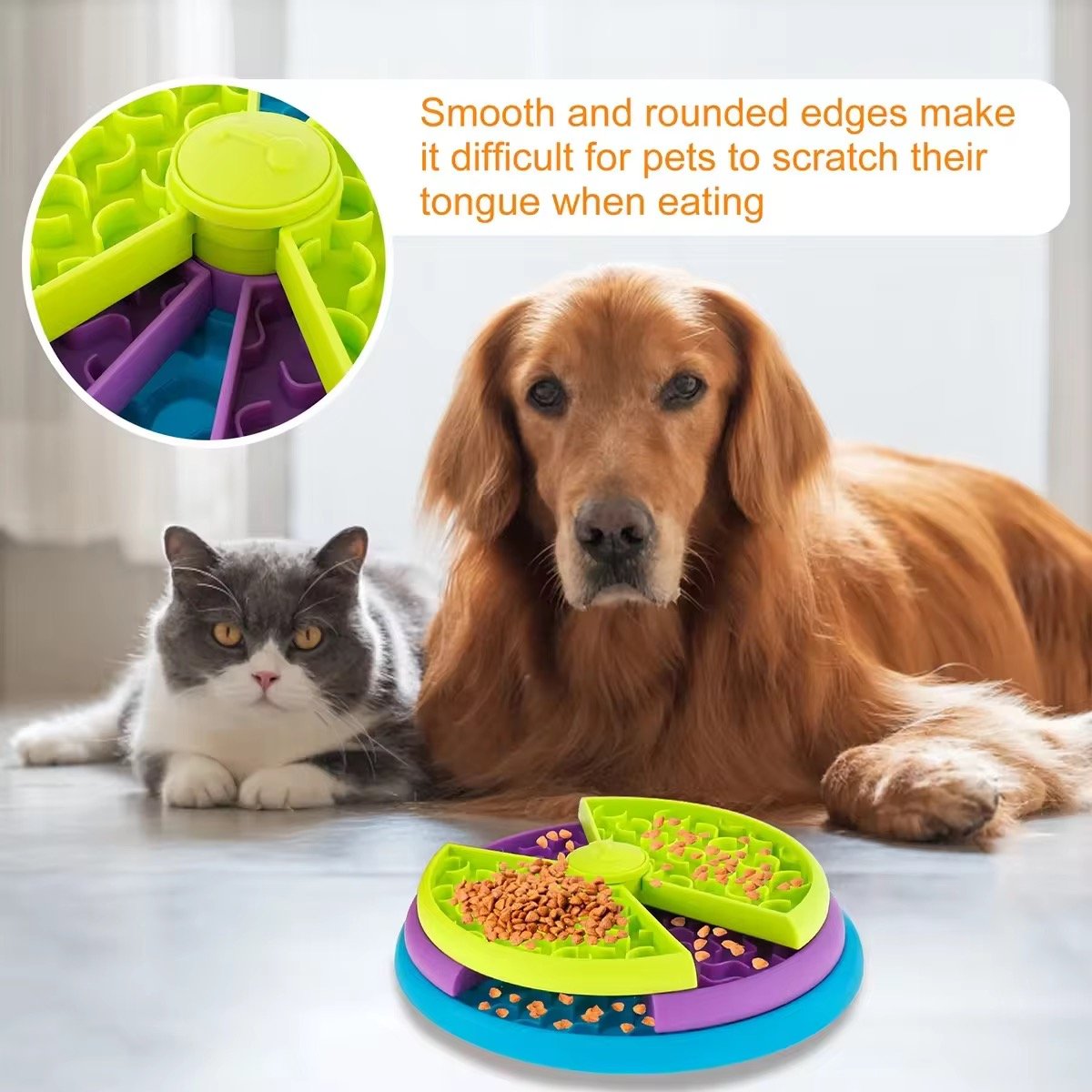
Eating rate is one of the most underappreciated digestive factors. Dogs that eat fast swallow significant amounts of air, which causes gas buildup, discomfort, and bloating — and in deep-chested breeds can trigger life-threatening GDV. Slow feeder bowls directly address this by forcing dogs to eat more slowly and methodically.
✅ Signs of a Well-Functioning Digestive System
- Firm, well-formed stools (log-shaped, not liquid or pellet-hard)
- 1–3 bowel movements per day, depending on meal frequency
- Minimal flatulence and no foul odor beyond expected
- Consistent appetite without dramatic swings
- Good energy, healthy coat, bright eyes
🚨 When to See Your Veterinarian Immediately
- Unproductive retching or vomiting (possible GDV — emergency)
- Blood in vomit or stool
- Abdominal distension with pain or restlessness
- Diarrhea lasting more than 48 hours
- Suspected ingestion of a foreign object
Start With Meal Management
One of the simplest, most evidence-backed changes you can make for your dog's digestive health is slowing down how they eat. The Vozonix Slow Feeder reduces air ingestion and supports healthier digestion at every meal.
Shop the Vozonix Slow Feeder — $24.99 →