Food anxiety in dogs is more common than most owners realize. It doesn't always look dramatic. Sometimes it's subtle — a dog that eats too fast, positions their body protectively over the bowl, or scans the room between bites. Other times it's obvious: growling, snapping, or frantic gulping that ends in vomiting.
Understanding where this anxiety comes from — and how to address it systematically — can transform mealtime from a stressful event into a genuinely positive one.
What Mealtime Anxiety Looks Like
⚠️ Common Signs of Mealtime Anxiety in Dogs
- Eating extremely fast — gulping food in under 60 seconds
- Resource guarding — growling, snapping, or stiffening when approached during meals
- Pacing or circling before meals are served
- Scanning behavior — repeatedly looking up from the bowl
- Eating in isolation — carrying food away from the bowl
- Post-meal restlessness — inability to settle after eating
- Regurgitation shortly after eating — stress affects esophageal motility
Root Causes of Mealtime Anxiety
1. Food Insecurity History
Dogs adopted from shelters or rescued from hoarding situations often experienced real food scarcity. The brain encodes this: food is scarce, eat fast. This is a survival response, not a behavior problem — and it can take months of consistent feeding to begin to override it.
2. Competition (Real or Perceived)
In multi-pet households, even friendly animals can create competitive eating dynamics. A dog doesn't need to be actively bullied — simply knowing another animal is nearby during meals can trigger anxiety. This is why some dogs eat perfectly calmly when fed separately but gulp frantically when fed together.
3. Irregular Feeding Schedules
Predictability is deeply calming for dogs. When meals arrive at inconsistent times, dogs can't regulate their anticipation — which amplifies into anxiety. Dogs fed on a strict schedule are measurably calmer at mealtime than those fed irregularly.
4. Bowl or Location Aversion
Stainless steel bowls can cause noise sensitivity from clinking tags. Reflective surfaces can confuse some dogs. High-traffic feeding locations create sensory overload. Sometimes changing the bowl type or location resolves anxiety that seemed behavioral.
A Practical Protocol to Reduce Mealtime Anxiety
Step 1: Establish a Rigid Feeding Schedule
Feed at the exact same times every day — within 15 minutes. This allows your dog's brain to anticipate meals predictably, which dramatically reduces pre-meal anxiety. Most dogs benefit from two meals daily; anxious eaters may do better with three smaller meals.
Step 2: Separate Competing Animals
Feed dogs in separate rooms with doors closed, or with visual barriers between them. Don't assume friendly dogs don't create competitive pressure — they often do.
Step 3: Use a Slow Feeder Bowl
A slow feeder bowl addresses the physical manifestation of mealtime anxiety (fast eating) while also providing a calming activity. The puzzle-like nature of navigating maze ridges engages the dog's brain in a focused, productive way — reducing the frantic energy that accompanies anxious eating. Many owners report visible behavioral improvement within the first week.
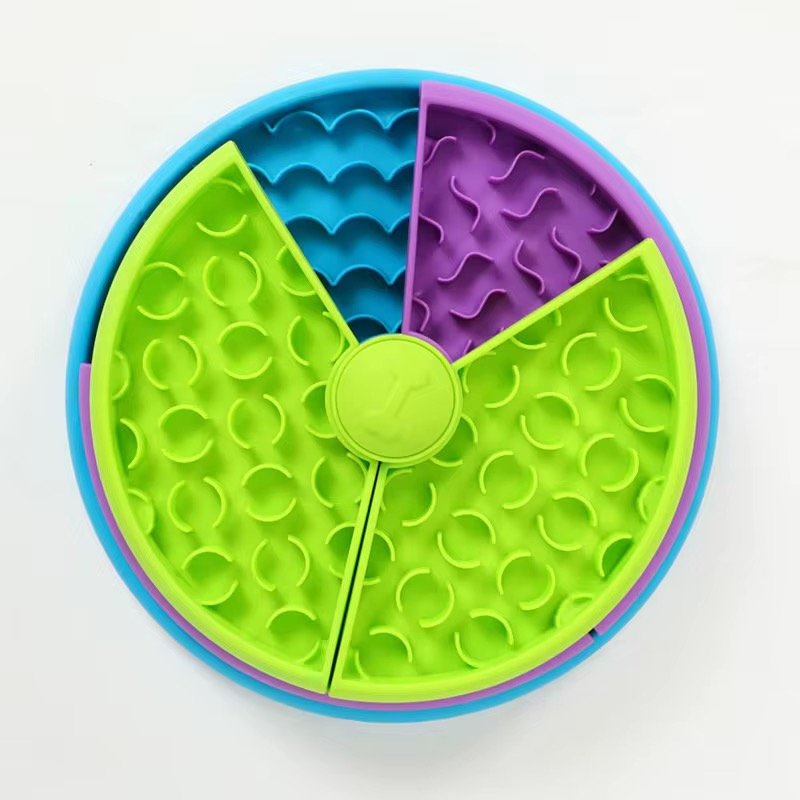
Calm the Mealtime Frenzy
The Vozonix 3-Level Slow Feeder transforms anxious, frantic eating into a calm, engaging activity. Vet-reviewed, BPA-free, dishwasher safe.
Shop the Vozonix Slow Feeder — $24.99 →Step 4: Counter-Conditioning for Resource Guarding
If your dog shows aggression around food, a structured counter-conditioning program is essential — ideally involving a certified veterinary behaviorist. The core principle: pair approaching the bowl with highly positive outcomes (high-value treats dropped near the bowl) until the association shifts from "threat" to "good things happen."
🚨 Do NOT Do These With a Food-Guarding Dog
- Do not take the bowl away mid-meal as a "dominance" exercise
- Do not punish growling — suppressing it creates bite-without-warning dogs
- Do not allow children unsupervised access to the dog during meals